When Do You Need a Towing Service Instead of Roadside Assistance?
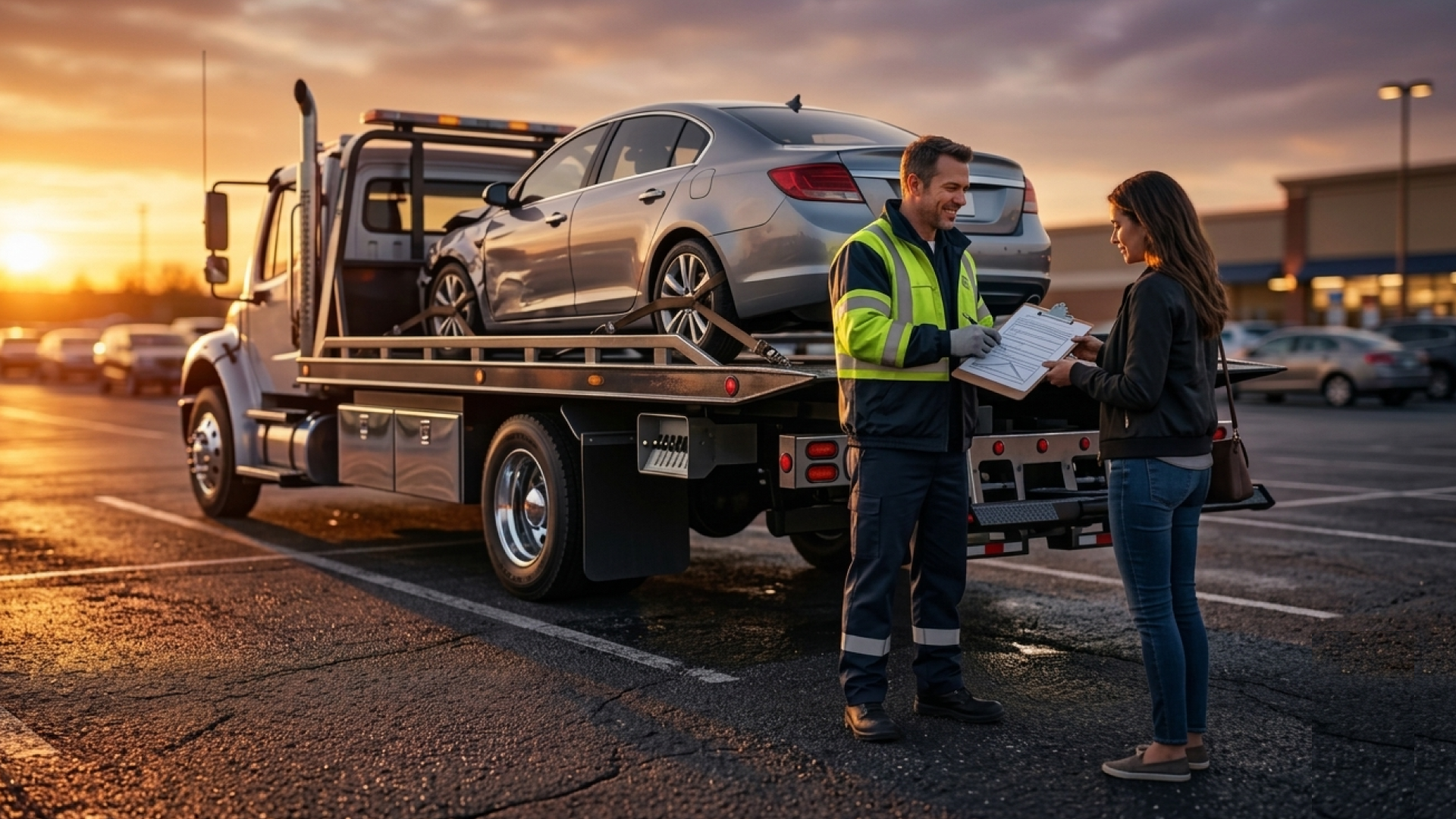
A vehicle problem does not always mean you need a tow truck. Sometimes a simple roadside service can get you moving again within minutes. A jump start may solve a dead battery, a tire change may handle a flat, or a small amount of fuel may get you safely to a gas station.
Other situations are different. If your vehicle has been badly damaged in an accident, will not start after a mechanical failure, has a serious tire problem, or cannot be driven safely, towing may be the better choice.
Knowing the difference between towing and roadside assistance can help you make a safer decision when your vehicle leaves you stranded. It can also help you explain the problem clearly when you call for help.
For drivers throughout Chicagoland, Chicago's South Suburbs, and Northwest Indiana, AQA Towing provides 24/7 towing and roadside assistance for situations ranging from breakdowns and accidents to lockouts, flat tires, dead batteries, and fuel emergencies.
What Is the Difference Between Towing and Roadside Assistance?
The simplest distinction is this: roadside assistance is generally intended to solve a problem where the vehicle can remain at the location, while towing is used when the vehicle needs to be transported somewhere else.
Roadside assistance may include services such as:
Jump-starting a dead battery
Changing a flat tire
Providing emergency fuel
Helping with a vehicle lockout
Addressing certain minor roadside problems
Providing limited assistance after a breakdown
Towing involves moving the vehicle from one location to another. Depending on the situation, a tow truck may transport the vehicle to a repair shop, home, storage location, dealership, or another appropriate destination.
The right service depends on what is wrong with the vehicle and whether it can be driven safely.
When Roadside Assistance May Be Enough
Roadside assistance can make sense when the problem is relatively straightforward and the vehicle can safely continue after the service is performed.
For example, imagine you are leaving work and discover that your battery is dead. If the vehicle starts normally after a jump, you may not need a tow.
The same principle can apply to a flat tire. If the tire can be safely replaced with a usable spare, roadside tire service may get you back on the road.
Other common examples include:
Running out of fuel
Locking your keys inside the vehicle
A dead battery
A flat tire with a usable spare
Certain minor roadside issues
The key question is not simply, "What went wrong?" It is "Can the vehicle be made safe and roadworthy at the location?"
When Towing Is Usually the Better Choice
Towing becomes more appropriate when the vehicle cannot safely or reliably continue driving.
Examples include:
Severe mechanical failure
An engine that will not run
Transmission problems
Serious overheating
Significant suspension or steering damage
Multiple damaged tires
A vehicle that cannot be safely moved
A vehicle that needs transportation to a repair facility
Trying to drive a vehicle that has a serious mechanical or structural problem can make the situation worse. It can also create additional danger for you, passengers, and other drivers.
If the vehicle cannot be driven safely, transportation is usually the practical next step.
7 Situations Where You Should Consider Towing
Different breakdowns require different responses. Here are some of the most common situations where calling a towing service makes more sense than requesting a basic roadside fix.
1. Your Vehicle Has Serious Accident Damage
A collision is one of the clearest reasons a vehicle may need towing.
Even if the engine still starts, the vehicle may not be safe to drive. Damage to the steering, suspension, wheels, tires, frame, lights, or other components can affect how the vehicle behaves on the road.
After an accident, look for obvious problems such as:
A wheel that is visibly damaged or out of position
Fluid leaking underneath the vehicle
Severe body damage affecting doors or wheels
Damaged headlights or brake lights
Steering problems
A tire that cannot hold air
Smoke, burning smells, or other warning signs
If you are unsure whether the vehicle is safe, avoid driving it simply because it still starts.
A tow truck can transport the vehicle to a repair shop or another appropriate location for inspection.
2. The Engine Will Not Start
A vehicle that refuses to start may have a dead battery, but the battery is not the only possible cause.
The problem could involve the starter, alternator, fuel system, ignition system, electrical components, or another mechanical issue.
A jump start can help if the battery is the problem. But if a proper jump does not resolve the issue, repeatedly trying to start the vehicle may not accomplish anything.
If the vehicle cannot be started and you need it moved, towing may be necessary.
3. Your Vehicle Has a Serious Mechanical Failure
Some mechanical problems make driving unsafe even if the vehicle technically still moves.
For example, a transmission problem can prevent normal acceleration or gear changes. A serious engine issue may cause loss of power or abnormal noises. Steering or suspension problems can affect the driver's ability to control the vehicle.
Other warning signs include:
Loud or unusual mechanical noises
Significant fluid leaks
Severe vibration
Loss of power
Persistent overheating
Difficulty steering
Braking problems
Warning lights accompanied by unusual vehicle behavior
A roadside technician may be able to identify or address certain minor problems, but not every mechanical failure can be repaired beside the road.
If the vehicle requires shop-level repairs, towing it to a qualified repair facility may be the safest option.
4. You Have a Flat Tire but No Usable Spare
A flat tire does not automatically mean you need a tow.
If your vehicle has a properly inflated spare tire and the vehicle manufacturer's instructions allow you to use it, a roadside tire change may be enough.
The situation changes if there is no spare, the spare is unusable, multiple tires are damaged, or the wheel itself has been damaged.
In those cases, there may be no safe way to get the vehicle moving under its own power. Towing can provide transportation without requiring you to drive on a damaged tire or wheel.
5. Your Vehicle Is Stuck or Cannot Be Safely Moved
A vehicle can become stranded for reasons that go beyond an ordinary breakdown.
For example, your car may become stuck after leaving the roadway, becoming disabled in a difficult location, or suffering damage that prevents normal movement.
The appropriate response depends on the circumstances and the type of vehicle involved.
Do not repeatedly accelerate or attempt aggressive maneuvers if doing so could damage the vehicle further or put people in danger. Professional recovery or towing assistance may be appropriate.
6. The Vehicle Has Overheated Seriously
An overheating engine deserves attention.
If the temperature gauge reaches a dangerous level, warning indicators appear, or steam is coming from under the hood, continuing to drive can cause additional engine damage.
Pull over somewhere safe and turn the vehicle off. Avoid opening a hot cooling system because pressurized coolant can cause serious burns.
Once the vehicle has cooled sufficiently, the next step depends on the cause of the overheating. If the problem cannot be safely resolved at the roadside, towing the vehicle to a repair facility may be the better option.
7. You Do Not Believe the Vehicle Is Safe to Drive
Drivers sometimes focus on whether a vehicle technically runs rather than whether it is safe.
Those are two different questions.
A vehicle may start and move while still having a dangerous problem involving its brakes, steering, tires, suspension, electrical system, or other components.
If something feels seriously wrong, do not assume you have to drive the vehicle to a repair shop.
When in doubt, describe the symptoms to the towing or roadside assistance provider. The information you provide can help determine what type of assistance is appropriate.
How to Decide Between a Tow and Roadside Assistance
When you are standing beside a disabled vehicle, it can be difficult to think through every possibility. A simple decision process can help.
Step 1: Get Yourself Out of Immediate Danger
If possible, move the vehicle away from moving traffic and into a safe location.
Turn on the hazard lights. If you are on a highway or busy road, remain aware of surrounding traffic and avoid standing unnecessarily close to the roadway.
Your personal safety comes before diagnosing the vehicle.
Step 2: Identify What Happened
Think about what occurred immediately before the vehicle stopped working.
Did the engine suddenly shut off?
Did you hear a loud noise?
Did a warning light appear?
Did you hit something?
Did a tire go flat?
Did the vehicle simply fail to start?
These details can help determine whether you need a simple roadside service or transportation.
Step 3: Ask Whether the Vehicle Can Be Safely Driven
This is one of the most useful questions to ask.
If the answer is yes and the problem is something a roadside technician can reasonably address, roadside assistance may be sufficient.
If the answer is no, towing is more appropriate.
Step 4: Tell the Service Provider Exactly What Happened
When you call, provide useful information rather than simply saying, "My car broke down."
Tell the provider:
Vehicle make and model
What happened
Whether the vehicle starts
Whether the vehicle can move
Whether there is accident damage
Whether anyone is injured
Whether you are blocking traffic
What type of assistance you think you may need
Clear information can help the provider understand the situation before arriving.
Roadside Assistance vs. Towing: A Simple Comparison
The distinction becomes easier to understand when the two services are placed side by side.
SituationRoadside AssistanceTowingDead batteryOften appropriateMay be needed if the vehicle will not restartFlat tire with usable spareOften appropriateMay be needed if no safe replacement is availableLocked keys inside vehicleOften appropriateUsually unnecessaryEmpty fuel tankOften appropriateMay be unnecessaryMajor accident damageUsually not enoughOften appropriateSerious engine failureUsually not enoughOften appropriateTransmission failureUsually not enoughOften appropriateDamaged wheel or suspensionMay require towingOften appropriateVehicle will not start after roadside troubleshootingMay require towingAppropriate if it cannot be safely drivenVehicle needs repair-shop transportationNot the primary serviceAppropriate
This table is a general guide, not a diagnosis. The actual response depends on the vehicle, the location, the type of damage, and the specific circumstances.
Common Misconceptions About Towing
"If the Car Starts, I Don't Need a Tow"
Not necessarily.
A vehicle can start while still having serious problems. If the brakes, steering, suspension, tires, or other safety-critical components are compromised, driving may be unsafe.
The ability to start the engine does not prove the vehicle is roadworthy.
"Every Flat Tire Requires a Tow"
That is also not true.
A flat tire may be resolved with a spare tire or appropriate roadside tire service. Towing becomes more relevant when there is no usable spare, the wheel is damaged, multiple tires are affected, or the vehicle cannot safely be driven.
"Roadside Assistance Always Means a Repair"
Roadside assistance is generally intended to provide help at the vehicle's location, but it does not mean every mechanical problem can be repaired there.
Some problems require diagnostic equipment, replacement parts, specialized tools, or a controlled repair environment.
When that happens, the next step may be towing.
"A Tow Is Only for Completely Destroyed Vehicles"
A tow truck is not limited to wrecked vehicles.
Cars with dead engines, transmission problems, damaged tires, overheating problems, electrical failures, or other issues may also require towing.
The determining factor is whether the vehicle needs to be transported rather than simply assisted at the roadside.
What Information Should You Have Ready When Calling?
A few basic details can make the call more useful.
Try to provide:
Your exact location. Include the road, direction of travel, nearby intersection, business, exit, or landmark.
Your vehicle information. Give the make, model, color, and approximate year if known.
The problem. Explain what happened before the vehicle became disabled.
Vehicle condition. Say whether it starts, moves, rolls, or has visible damage.
Your destination. If towing is needed, explain where you want the vehicle transported.
Safety concerns. Mention if you are on a highway shoulder, in an active traffic lane, or in another hazardous location.
The more accurately you describe the situation, the easier it is for the towing provider to understand what kind of assistance may be required.
What Should You Do While Waiting for a Tow Truck?
Once help has been requested, focus on staying safe.
Turn on your hazard lights if the vehicle has power. If you can safely remain inside the locked vehicle and traffic conditions make exiting dangerous, staying inside may be preferable.
If you must exit, use good judgment based on the surrounding traffic and your location. Keep children and other passengers away from moving vehicles.
Do not attempt a risky roadside repair simply because you are waiting for assistance. A few extra minutes are not worth creating another safety problem.
If you are involved in an accident, follow applicable safety procedures, exchange required information, and contact emergency services when necessary.
When Is 24/7 Towing Especially Useful?
Vehicle problems do not follow business hours. A breakdown can happen early in the morning, late at night, on a weekend, or during a holiday.
Twenty-four-hour towing and roadside assistance can be useful when a vehicle becomes disabled outside normal repair-shop hours.
This can be particularly relevant for:
Late-night breakdowns
Early-morning vehicle failures
Accidents outside normal business hours
Highway emergencies
Vehicles that need transportation to a repair facility
Drivers stranded away from home
A 24/7 towing provider can help address the immediate transportation problem while the vehicle's underlying mechanical issue is handled separately.
How Can You Reduce the Risk of Needing a Tow?
Not every breakdown can be prevented, but basic vehicle maintenance can reduce avoidable problems.
Keep an eye on:
Tire pressure and tread condition
Battery condition
Engine oil and other required fluids
Brake performance
Warning lights
Cooling-system concerns
Unusual noises or vibrations
Scheduled maintenance
It is also useful to keep an emergency kit in your vehicle with items such as a flashlight, basic first-aid supplies, reflective equipment, and a phone charger.
Regular maintenance does not guarantee that a breakdown will never happen. It simply gives you a better chance of identifying problems before they become roadside emergencies.
The Bottom Line: Roadside Assistance or Towing?
The decision usually comes down to one question: Can the vehicle be made safe and usable where it is, or does it need to be transported?
Choose roadside assistance when a relatively simple issue, such as a dead battery, flat tire, lockout, or fuel shortage, can reasonably be addressed at the location.
Consider towing when the vehicle has major accident damage, serious mechanical problems, cannot be started, cannot be safely driven, or needs transportation to a repair facility.
If you are uncertain, describe the symptoms and vehicle condition to the service provider. You do not need to diagnose the entire problem yourself.
For drivers in Chicagoland, Chicago's South Suburbs, and Northwest Indiana, AQA Towing provides 24/7 towing and roadside assistance for breakdowns, accidents, flat tires, dead batteries, lockouts, fuel emergencies, and vehicle transportation.
Conclusion
Knowing when to request towing instead of roadside assistance can save time and prevent an already stressful vehicle problem from becoming more serious.
Roadside assistance is generally suited to problems that can be addressed where the vehicle is located. Towing is the better fit when the vehicle cannot be safely driven or needs to be transported somewhere else for repair or inspection.
A dead battery may only require a jump start. A flat tire may only require a tire change. But a badly damaged vehicle, failed engine, serious overheating problem, damaged wheel, or unsafe steering or braking issue may need to be towed.
When a breakdown happens, put safety first, identify what you can about the problem, and clearly explain the situation when you request assistance. The goal is not simply to get the vehicle moving—it is to make sure you and everyone around you remain safe while the vehicle receives the help it needs.
Frequently Asked Questions
Is towing the same as roadside assistance?
No. Roadside assistance generally provides help at the vehicle's location, such as a jump start, tire change, lockout assistance, or emergency fuel. Towing involves transporting the vehicle to another location.
How do I know if my car needs a tow?
Your car may need a tow if it cannot be safely driven, will not start after appropriate roadside troubleshooting, has major accident damage, has serious mechanical problems, or needs transportation to a repair shop.
Can a tow truck help with a dead battery?
Yes. A dead battery may be handled with a jump start if appropriate. If the vehicle still will not start or another problem is suspected, towing may be necessary.
Does a flat tire always require towing?
No. If you have a usable spare tire and the vehicle can safely accept it, a roadside tire change may solve the problem. If there is no spare, the wheel is damaged, or the vehicle cannot safely move, towing may be needed.
Should I drive my car after an accident if it still runs?
Not automatically. A vehicle may have hidden or obvious damage affecting its steering, suspension, tires, brakes, lights, or other components. If there is significant damage or you are unsure whether it is safe, have the vehicle evaluated and consider towing it.
Can roadside assistance repair a broken-down car?
Some minor problems may be addressed at the roadside, but many mechanical failures require a repair shop, specialized tools, replacement parts, or additional diagnosis. In those situations, towing may be required.
What should I tell a towing company when my vehicle breaks down?
Provide your location, vehicle make and model, description of the problem, whether the vehicle starts or moves, visible damage, and your desired towing destination if transportation is needed.
Is it safer to tow a car that is overheating?
If a vehicle is seriously overheating, continuing to drive can cause additional damage. Pull over safely, turn the vehicle off, and allow it to cool. If the cause cannot be safely resolved, towing the vehicle to a repair facility may be appropriate.
Can I request towing at night?
Many towing companies offer 24/7 service, allowing drivers to request assistance outside normal business hours. Availability and the services provided can vary by location and provider.
What is the biggest difference between roadside assistance and towing?
The biggest difference is the purpose of the service. Roadside assistance is generally intended to address a problem at the vehicle's current location, while towing is used to transport a vehicle that cannot or should not continue driving.