
How Does a Professional Towing Service Safely Move a Disabled Vehicle?
Introduction
A disabled vehicle can become a serious roadside problem in a matter of minutes. A car may stop running after an accident, lose power because of a mechanical failure, develop a flat tire, run out of fuel, or refuse to start because of a dead battery. If the vehicle cannot be driven safely, moving it requires more than simply attaching a tow strap and pulling it away. A professional towing service uses the right equipment, towing method, and safety procedures based on the vehicle's condition and location. The goal is to move the vehicle without causing additional damage while protecting the driver, passengers, tow operator, and other people on the road. So, how does a professional towing service safely move a disabled vehicle? The process usually starts with assessing the situation, securing the scene, selecting suitable towing equipment, properly connecting the vehicle, and transporting it carefully to the requested destination. Understanding this process can help vehicle owners make better decisions during a breakdown or accident. It also explains why professional towing is often a safer choice than attempting to move a disabled vehicle without the proper equipment or experience.
What Does It Mean to Tow a Disabled Vehicle?
A disabled vehicle is any vehicle that cannot safely continue driving under its own power. The problem may be temporary, such as a dead battery or flat tire, or more serious, such as collision damage, engine failure, transmission problems, or significant mechanical damage. Not every disabled vehicle should be moved in the same way. A running vehicle with a flat tire presents a different towing situation from a wrecked vehicle with damaged suspension or a car that has been involved in a collision. Professional towing involves determining the vehicle's condition and choosing a method that limits unnecessary movement and protects components that may already be damaged. Common reasons a vehicle may need towing include:
Engine or mechanical failure
Transmission problems
Collision or accident damage
Flat or damaged tires
Dead battery
Electrical failure
Overheating
Vehicle stuck in an unsafe location
Fuel-related problems
A vehicle that will not start
Minor roadside problems that cannot be resolved at the scene
A towing professional may also provide roadside assistance when towing is not actually necessary. For example, a jump start, fuel delivery, lockout service, tire change, or minor roadside repair may allow the driver to continue without transporting the vehicle.
How Does a Professional Towing Service Safely Move a Disabled Vehicle?
The exact process depends on the vehicle and circumstances, but professional towing generally follows several important steps.
1. The Towing Professional Assesses the Situation
Before moving the vehicle, the operator needs to understand what happened. The assessment can include the vehicle's location, size, condition, drivetrain, accessibility, and visible damage. The operator may also determine whether the vehicle can roll, steer, and brake normally. This information helps determine which towing equipment and technique are appropriate. A vehicle involved in a collision, for example, may have hidden damage that makes ordinary towing unsuitable. A car with severe wheel or suspension damage may require equipment that prevents the damaged components from being dragged along the road. You can learn more about how tow operators assess vehicle damage before transport.
2. The Scene Is Made as Safe as Possible
A disabled vehicle on or near a busy roadway creates risks for everyone nearby. Before loading or connecting the vehicle, the towing operator considers traffic, road conditions, visibility, vehicle position, and other hazards. Warning lights and appropriate safety procedures can help make the roadside work area more visible to approaching traffic. Drivers passing the scene should also slow down and give the tow operator plenty of room. Roadside towing can require the operator to work close to moving traffic, so awareness from everyone around the scene matters. Drivers can also review these roadside safety tips while waiting for a tow truck.
3. The Appropriate Towing Equipment Is Selected
There is no single towing method that works for every vehicle. Professional towing companies may use flatbed tow trucks, wheel-lift equipment, recovery equipment, and other tools depending on the situation. The choice can depend on vehicle weight, drivetrain, ground clearance, damage, steering ability, and the distance or type of transportation required. Selecting the right equipment is one of the most important parts of preventing additional vehicle damage. The wrong equipment can create unnecessary risks, which is why drivers should understand what happens if you choose the wrong tow truck for your vehicle.
4. The Vehicle Is Properly Connected or Loaded
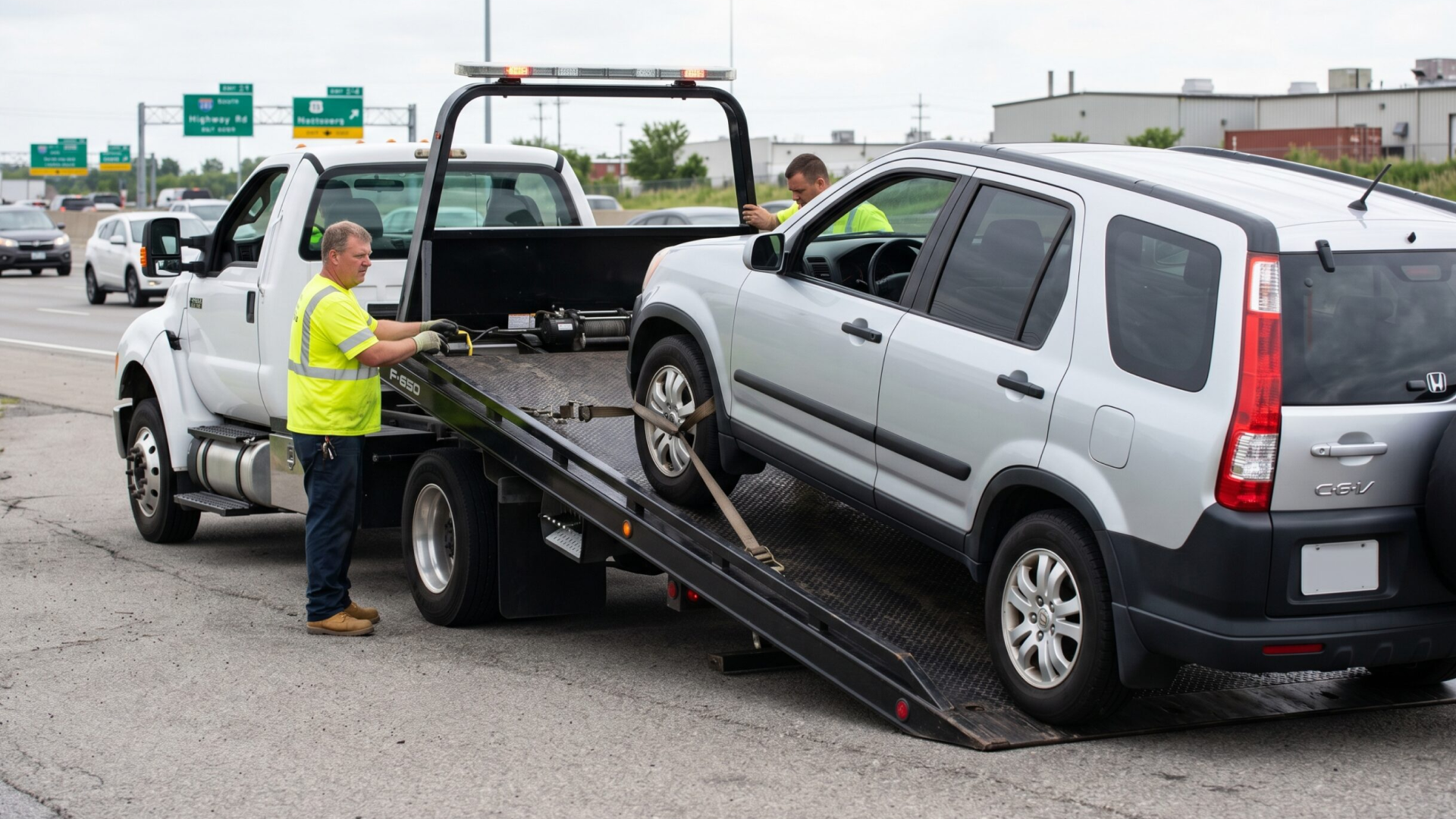
Once the towing method has been selected, the operator positions the equipment and secures the vehicle according to the equipment's requirements. With a flatbed tow truck, the vehicle is typically positioned on the platform and secured so it remains stable during transportation. With wheel-lift towing, the appropriate wheels are lifted from the ground while the vehicle is secured to the towing apparatus. The method must be suitable for the specific vehicle and its condition. The operator also checks that attachment points and restraints are secure before beginning transportation.
5. Damaged Components Are Considered
Accident-damaged vehicles require extra care. A damaged bumper, wheel, axle, suspension component, steering system, or undercarriage can affect how a vehicle should be moved. Pulling or lifting a vehicle from the wrong point can turn a relatively manageable repair into a more complicated one. Professional operators assess visible damage and use equipment appropriate for the situation. If a vehicle cannot be safely moved using a conventional method, additional recovery equipment may be required. This is particularly important when a vehicle needs towing after an unexpected breakdown.
6. The Vehicle Is Transported Carefully
Once the vehicle is secured, the operator transports it to the requested location. Safe towing is not simply about getting from point A to point B as quickly as possible. The tow operator must account for traffic, turns, braking, road conditions, vehicle stability, and the condition of the disabled vehicle. Careful driving reduces unnecessary movement and helps keep the vehicle and surrounding traffic safe. For longer transportation needs, proper vehicle security for long drives becomes especially important.
7. The Vehicle Is Safely Unloaded
The process does not end when the tow truck reaches its destination. The operator must position the truck appropriately and unload the vehicle in a controlled manner. The vehicle may be delivered to a repair shop, residence, storage facility, dealership, or another requested location. The same care used during loading is needed during unloading because an improperly controlled vehicle can shift or move unexpectedly.
What Is the Difference Between Flatbed and Wheel-Lift Towing?
Two common towing methods are flatbed towing and wheel-lift towing. Each has situations where it may be appropriate.
Flatbed Towing
A flatbed tow truck uses a platform that carries the vehicle rather than leaving the vehicle's tires on the roadway during transportation. This method can be useful for vehicles that should not be driven or rolled for an extended distance. It can also be appropriate for certain accident-damaged vehicles and vehicles with specific transportation requirements. The vehicle is loaded onto the platform and secured before transportation. Drivers who want to understand the available options can review the differences involved in choosing between flatbed and wheel-lift towing.
Wheel-Lift Towing
Wheel-lift towing uses a lifting mechanism to raise one end of the vehicle while the other end remains on the road. It can be practical for certain breakdowns and local towing situations. However, the appropriate setup depends on the vehicle's drivetrain, condition, and manufacturer requirements. A professional operator considers these factors before deciding how to move the vehicle.
Which Towing Method Is Better?
There is no universal answer. Flatbed towing may be preferable when the vehicle should be completely off the road during transportation. Wheel-lift towing can be suitable for situations where lifting the appropriate wheels is safe and practical. The condition of the vehicle should guide the decision rather than convenience alone.
Why Is Professional Towing Safer Than Moving a Vehicle Yourself?
A disabled vehicle may look simple to move, but roadside towing involves several potential hazards. Improperly attaching a vehicle can cause damage to suspension, steering, body panels, wheels, or other components. A vehicle that is not adequately secured can also shift during transportation. Professional towing operators have access to towing equipment designed for vehicle recovery and transportation. They also have experience assessing different roadside situations and selecting an appropriate method. Trying to pull a disabled vehicle with an unsuitable vehicle, rope, chain, or improvised attachment can create unnecessary risks. The safest choice is generally to use equipment appropriate for the vehicle and situation. For more context, see how to know when your car needs professional towing.
What Happens If a Vehicle Is Damaged After an Accident?
Accident recovery requires more consideration than a routine breakdown tow. A collision can affect the vehicle's steering, suspension, wheels, frame, bumpers, or other components. Some damage may not be immediately visible, which is one reason an accident-damaged vehicle should not automatically be treated like a normal running vehicle. A towing professional can assess the visible condition before attempting to move it. Depending on the damage, the vehicle may need to be winched, loaded onto a flatbed, or handled using specialized recovery equipment. The vehicle's final destination also matters. If it is going to a collision repair facility, careful transportation can help preserve its condition for inspection and repair. Drivers can also learn more about what happens to your car after an accident.
Can a Towing Service Help Without Towing the Vehicle?
Yes. Some roadside problems can be resolved without transporting the vehicle. For example, a driver with a dead battery may need a jump start or battery assistance. Someone with a flat tire may need a tire change. A driver who accidentally locks the keys inside the vehicle may need lockout assistance, while someone who has run out of fuel may need delivery. Minor roadside repairs may also solve certain problems at the scene. The practical benefit is that the driver does not necessarily need a tow when a safe roadside repair can restore the vehicle to operating condition.
Common Mistakes People Make With Disabled Vehicles
A few mistakes can turn a roadside breakdown into a larger problem.
Continuing to Drive a Damaged Vehicle
If a vehicle has significant mechanical or collision damage, continuing to drive it can make the problem worse. A vehicle that pulls to one side, has damaged steering, has a compromised tire, or has serious fluid leaks should not automatically be driven to a repair shop.
Using Improper Towing Equipment
A rope, strap, or chain is not automatically appropriate for every vehicle or recovery situation. Improper equipment can fail or damage the vehicle.
Ignoring the Vehicle's Drivetrain
Front-wheel-drive, rear-wheel-drive, and all-wheel-drive vehicles can have different towing considerations. The vehicle's owner's manual and proper towing procedures should be taken into account. Drivers with AWD vehicles can review what they need to know about towing an all-wheel-drive vehicle.
Failing to Secure Loose Parts
After an accident, bumpers, panels, trim pieces, and other components may be loose. These parts should be considered before transportation begins.
Standing in an Unsafe Location
Drivers sometimes remain close to the disabled vehicle while waiting for assistance. If the vehicle is stopped near active traffic, getting to a safer location when possible is generally preferable.
What Information Should You Give a Towing Company?
Clear information can help a towing operator prepare for the situation. When requesting towing or roadside assistance, be ready to provide:
Your location
Vehicle make, model, and approximate size
The reason the vehicle is disabled
Whether the vehicle starts
Whether the wheels roll
Whether the vehicle can steer
Whether there is visible accident damage
Whether the vehicle is blocking traffic
Your desired destination
Any other relevant roadside hazards
If the vehicle is in an unusual position, such as being stuck in a ditch or partially off the roadway, mention that as well. Accurate information gives the towing provider a better understanding of what equipment and assistance may be needed. You can also review what information a towing company needs to locate a stranded driver.
Best Practices for Staying Safe While Waiting for a Tow Truck
The towing process begins before the tow truck arrives. If your vehicle becomes disabled, turn on the hazard lights when appropriate and move the vehicle away from traffic if it can be done safely. If moving the vehicle would create additional danger, leave it where it is and seek professional assistance. Keep passengers away from moving traffic and avoid standing directly behind or in front of the disabled vehicle. If conditions are dangerous, such as heavy traffic, poor visibility, severe weather, or a vehicle stopped in an active travel lane, tell the towing provider when requesting assistance. Good communication can make the roadside situation easier to manage.
How Professional Towing Supports Different Roadside Emergencies
Towing is only one part of roadside vehicle assistance. A full-service towing and roadside provider may help with several common emergencies, including:
Emergency towing
Local towing
Accident recovery
Breakdown towing
Flatbed towing
Light-duty towing
Jump starts
Flat-tire changes
Lockout assistance
Fuel delivery
Battery assistance
Minor roadside repairs
This range of services matters because the correct solution depends on what caused the vehicle to stop. A dead battery may need a jump start. A vehicle with major collision damage may require recovery and transportation. A simple flat tire may only require a tire change.
Practical Example: What a Safe Tow Looks Like
Imagine a driver experiences a mechanical failure on a busy road in the Chicago area. The vehicle can no longer move under its own power, but it is sitting in a location where passing traffic remains a concern. The driver contacts a towing provider and explains the vehicle's location, condition, and symptoms. When the tow operator arrives, the operator assesses whether the vehicle rolls, steers, and has visible damage. The operator then selects appropriate towing equipment, positions the truck safely, secures the vehicle, and checks the restraints before transportation. The vehicle is transported carefully to its destination rather than being moved with improvised equipment. That process may look straightforward from the outside, but each step contributes to safer vehicle transportation.
What Should You Look for in a Professional Towing Service?
When choosing towing assistance, consider more than whether a company has a tow truck. Look for a provider that offers the type of assistance your situation requires and clearly explains what will happen next. Useful factors include:
24/7 availability for emergencies
Local towing coverage
Accident recovery capability
Appropriate towing equipment
Roadside assistance options
Clear communication
Experience with different vehicle conditions
A defined destination for vehicle transportation
If you need assistance in Chicagoland, Chicago's South Suburbs, or Northwest Indiana, a local provider familiar with the area can be a practical option. Before choosing a provider, consider these 5 questions every motorist should ask when choosing a reliable tow company.
Frequently Asked Questions
How does a tow truck move a car that will not start?
A tow truck can move a vehicle that will not start by using equipment designed to load or lift the vehicle. Depending on its condition, a flatbed may carry the entire vehicle, while a wheel-lift system may raise the appropriate wheels.
Can a damaged car be towed after an accident?
Yes, but the towing method should account for the vehicle's damage. Steering, suspension, wheels, body components, and other damaged parts can affect how the vehicle should be recovered and transported.
Is flatbed towing safer for a damaged vehicle?
Flatbed towing can be appropriate for many damaged vehicles because the entire vehicle can be carried on the truck platform. However, the best method depends on the type and extent of damage.
Can an all-wheel-drive vehicle be towed?
An all-wheel-drive vehicle may require specific towing procedures to avoid drivetrain damage. The vehicle's manufacturer recommendations and its condition should be considered when selecting the towing method.
What should I do while waiting for a tow truck?
Turn on hazard lights when appropriate, move away from active traffic when it is safe to do so, and keep passengers in a safer location. Tell the towing provider about traffic hazards, vehicle damage, or unusual circumstances.
Can roadside assistance fix a vehicle instead of towing it?
Sometimes. Services such as jump starts, tire changes, fuel delivery, lockout assistance, battery assistance, and minor roadside repairs may resolve certain problems without requiring a tow.
How do I know whether my car needs towing or roadside assistance?
If the vehicle can be safely repaired at the scene, roadside assistance may be enough. If it cannot be driven safely because of serious mechanical, electrical, tire, steering, suspension, or collision damage, towing may be more appropriate.
Can a car with a flat tire be towed?
Yes. A vehicle with a flat or damaged tire can be transported when necessary. Depending on the situation, a tire change may be sufficient, or the vehicle may need towing if the tire cannot be safely replaced at the roadside.
What information should I give a towing company?
Provide your location, vehicle type, reason for the breakdown, whether it starts and rolls, visible damage, and your desired destination. Mention if the vehicle is blocking traffic or is in a difficult recovery position.
How can professional towing prevent additional vehicle damage?
Professional towing uses appropriate equipment and procedures based on the vehicle's condition. Proper loading, securing, and transportation can reduce unnecessary stress on damaged or disabled components and help prevent additional damage.
