
What Should Drivers Know About Towing Cars, SUVs, Light Trucks, and Vans?
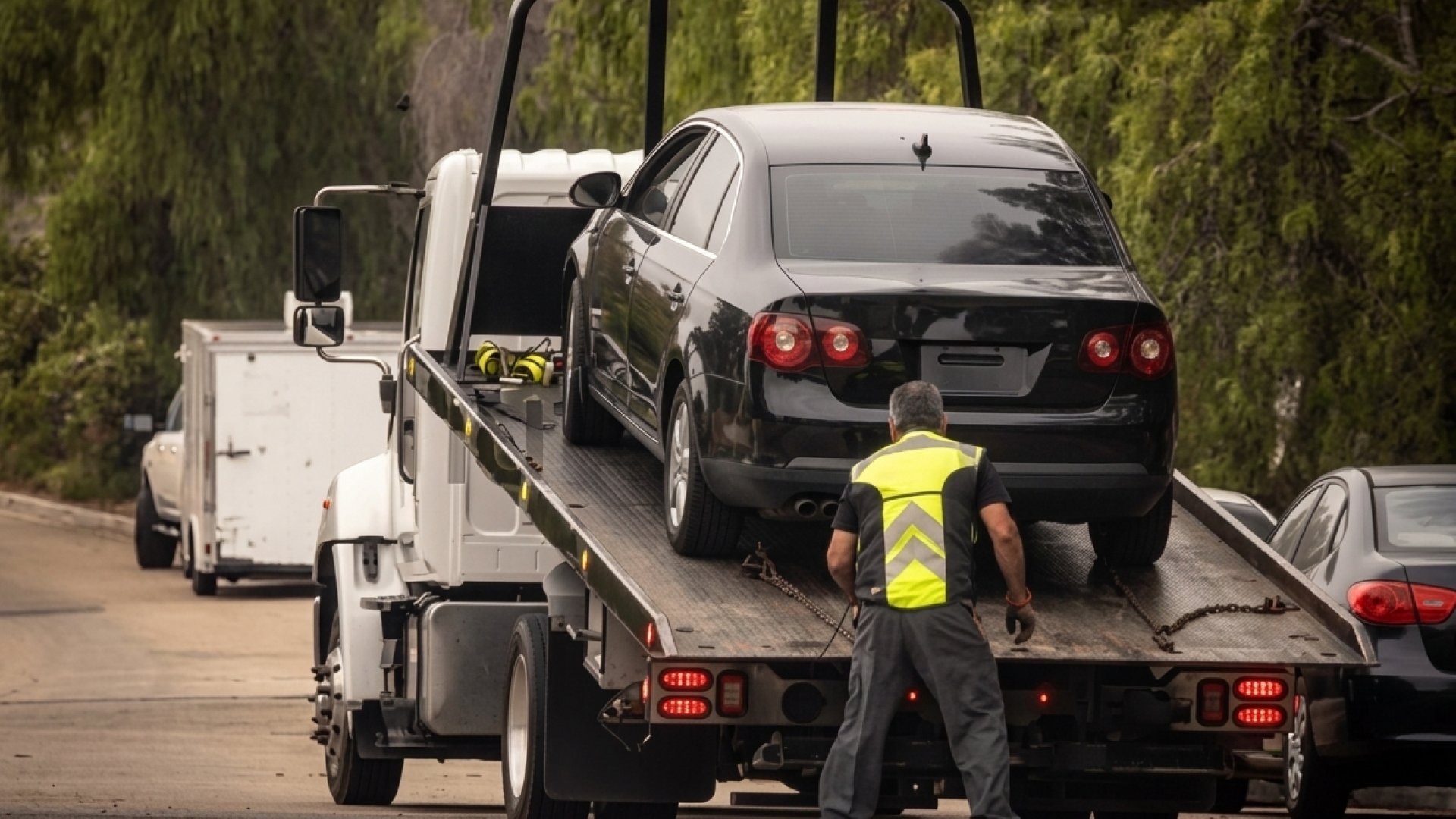
When a vehicle needs to be towed, it is easy to assume that every car, SUV, light truck, and van can simply be hooked up and transported in exactly the same way. In reality, vehicle type, condition, drivetrain, size, and the circumstances surrounding the tow can all influence how a vehicle should be handled.
For drivers in Chicago, the South Suburbs, and Northwest Indiana, AQA Towing provides 24/7 emergency towing for cars, SUVs, light trucks, and vans, along with local towing, breakdown towing, accident recovery, flatbed towing, and light-duty towing. The company also provides roadside assistance when a vehicle may be repaired at the roadside instead of transported.
Understanding the basics can help drivers provide better information when requesting service, recognize when professional towing is appropriate, and avoid assuming that the same towing solution works for every vehicle.
Does Every Vehicle Get Towed the Same Way?
No. One of the most important things drivers should understand is that towing is not a one-size-fits-all process.
A small passenger car may have different towing considerations than an SUV or light truck. A van may have different dimensions or weight characteristics. A damaged vehicle may need different handling than an otherwise operational vehicle.
AQA Towing explains that vehicle type, drivetrain, and condition can influence towing equipment and that accurate vehicle information helps dispatch coordinate the appropriate response.
This is why a towing company may ask several questions before sending a truck.
The goal isn't to complicate the service request. The goal is to make sure the vehicle and circumstances are understood before the tow begins.
What Information Should You Give a Tow Company About Your Vehicle?
When requesting towing service, start with the basic facts.
Useful information includes:
Vehicle make
Model
Approximate year
Color
Vehicle type
Whether the vehicle starts
Whether it can move
Whether it has visible damage
Whether it was involved in an accident
Your exact location
Your destination, if known
For example:
"I have a black 2022 Ford Explorer. It won't start and it's parked on the shoulder near the intersection."
That's much more useful than simply saying:
"I need a tow for my Ford."
AQA Towing's dispatch guidance emphasizes that complete information about the vehicle and situation can help prevent miscommunication and equipment mismatches.
Why Does the Vehicle Type Matter?
Knowing whether the vehicle is a car, SUV, light truck, or van gives the towing company an initial understanding of what it may be dealing with.
AQA Towing specifically lists cars, SUVs, light trucks, and vans among the vehicles covered by its emergency towing service.
Drivers don't need to determine which tow truck is necessary. Instead, provide accurate information and allow the towing professionals to determine the appropriate approach.
How Is Towing a Car Different From Towing an SUV?
Cars and SUVs can both require towing after breakdowns, accidents, flat tires, or other roadside problems, but they aren't necessarily identical from a towing perspective.
An SUV may have different dimensions, weight characteristics, drivetrain configuration, or ground clearance than a passenger car.
That doesn't mean an SUV automatically requires a particular type of tow. It means the towing company needs accurate information about the vehicle.
What Should You Tell AQA Towing?
If you're requesting a tow for an SUV, provide:
Make and model
Approximate year
Whether it's two-wheel drive or all-wheel drive, if known
Whether it starts
Whether it can roll
Whether there is accident damage
Whether the tires and wheels are intact
Your location
If you don't know the drivetrain or other technical details, don't guess.
Simply provide the information you know.
The towing operator can ask follow-up questions if additional information is needed.
For additional information about drivetrain considerations, see towing an all-wheel-drive vehicle.
What Should Drivers Know About Towing Light Trucks?
Light trucks are another common vehicle category requiring towing and roadside assistance.
A light truck might be used for commuting, business purposes, hauling equipment, or everyday transportation. When it becomes disabled, the towing company needs to know that it is a light truck rather than assuming it is a standard passenger vehicle.
AQA Towing includes light-duty towing among its listed services and specifically serves light trucks as part of its emergency towing coverage.
Why Is Accurate Information Important for Light Trucks?
Truck configuration can vary considerably.
For example, a light truck may have:
Different dimensions
Different weight characteristics
Different drivetrain configurations
A damaged load area
Equipment or cargo that affects handling
Accident-related damage
Providing accurate information helps the towing company prepare for the actual vehicle rather than relying on assumptions.
What If the Truck Is Loaded?
If your light truck is carrying equipment, tools, materials, or other substantial cargo, mention that when requesting service if it could affect the vehicle's condition or handling.
The important principle is simple:
Tell the towing company what they are actually coming to tow.
What Should Drivers Know About Towing Vans?
Vans can also require professional towing after breakdowns, collisions, or other roadside problems.
Depending on the type of van and its condition, its dimensions and configuration may be different from those of a passenger car.
When requesting a tow for a van, provide:
Make and model
Approximate year
Vehicle size or type, if known
Whether it starts
Whether it can move
Whether it has accident damage
Whether it is carrying cargo
Exact location
AQA Towing lists vans among the vehicles covered by its 24/7 emergency towing service.
Again, the driver doesn't need to choose the towing equipment. Accurate vehicle information allows the towing company to make that determination.
Why Does Vehicle Condition Matter When Towing?
Vehicle type is only one part of the equation.
Vehicle condition can be just as important.
A normally functioning vehicle that needs transportation is different from a vehicle that:
Won't start
Has a flat tire
Cannot roll
Has damaged wheels
Has steering problems
Has significant accident damage
Is leaking fluid
Has experienced a mechanical failure
Has been involved in a collision
AQA Towing emphasizes professional vehicle handling and appropriate equipment for different towing situations.
A Vehicle That Won't Start
Tell the dispatcher that the engine doesn't start.
Don't assume that "won't start" automatically means the vehicle needs a full tow. Depending on the circumstances, a jump start or another roadside service may solve the problem.
AQA Towing offers jump starts and battery replacement assistance as part of its roadside services.
A Vehicle That Starts but Won't Move
This is different.
If the engine runs but the vehicle cannot move, tell the dispatcher.
Don't repeatedly attempt to force the vehicle to move.
A Vehicle With Accident Damage
Accident damage should always be mentioned.
Explain whether:
The vehicle rolls
The wheels appear damaged
The steering works
Tires are damaged
Parts are hanging from the vehicle
The vehicle has significant body damage
The more complete the description, the better the towing company can understand the situation before arriving.
For more information, see what happens to your car after an accident.
What Is Flatbed Towing and When Might It Be Used?
Flatbed towing is one of the towing services AQA Towing lists among its capabilities.
With flatbed towing, the vehicle is transported on the bed of the tow truck rather than being pulled along the roadway in the same way as some other towing configurations.
Flatbed towing can be particularly relevant when the vehicle needs to be transported securely and the circumstances call for that type of equipment.
Drivers should not assume they need a flatbed simply because they own a certain type of vehicle.
Instead, provide information about:
Vehicle type
Vehicle condition
Drivetrain, if known
Accident damage
Whether the vehicle rolls
Location
Destination
The towing professional can then determine what equipment is appropriate.
Drivers can also learn more about choosing between flatbed and wheel-lift towing.
Does Drivetrain Affect How a Vehicle Should Be Towed?
It can.
Drivetrain is one of the vehicle characteristics that can influence towing considerations. AQA Towing's dispatch information specifically notes that vehicle type, drivetrain, and condition can affect towing method and equipment selection.
If you know whether your vehicle is:
Front-wheel drive
Rear-wheel drive
All-wheel drive
Four-wheel drive
provide that information.
What If You Don't Know?
Don't worry.
You can simply provide the make, model, and year and answer any questions the dispatcher asks.
If you're uncertain, say you're uncertain rather than guessing.
Accurate information is more valuable than technical terminology.
Why Is Accurate Vehicle Information Important for Dispatch?
Towing dispatch is essentially a coordination process.
The company needs to connect:
the right vehicle → the right location → the right service → the appropriate equipment.
AQA Towing explains that dispatch accuracy can affect arrival times because incorrect locations or incomplete vehicle information can result in misrouting, additional communication, or equipment issues.
For example, imagine a driver simply says:
"I have an SUV that needs a tow."
Important questions remain unanswered.
Where is it?
Does it start?
Can it move?
Was it in an accident?
Is it on a highway?
Does it have damaged wheels?
Where does it need to go?
Answering these questions early gives dispatch a much clearer picture.
How Can Drivers Help AQA Towing Locate the Vehicle Faster?
Location information is just as important as vehicle information.
When requesting a tow, provide:
Street name
Nearest intersection
Direction of travel
Highway name
Exit number
Mile marker
Nearby business
Parking lot name
GPS location, if available
AQA Towing's dispatch guidance emphasizes that incomplete location information can cause a tow truck to arrive at the wrong street, entrance, or block.
What If You're on a Highway?
Give the:
Highway name
Direction of travel
Exit number
Mile marker
Nearest landmark
Shoulder or roadside position
If you're unsure of your exact location, use your phone's mapping application if it is safe to do so.
Don't put yourself in danger simply to obtain a more precise location.
When Does a Vehicle Need a Tow Instead of Roadside Assistance?
Not every vehicle problem requires towing.
This is an important distinction for drivers.
AQA Towing offers roadside services including:
Jump starts
Battery replacement assistance
Flat tire changes
Lockout service
Fuel delivery
Minor roadside repairs
The company explains that if a vehicle can be safely fixed at the roadside, towing may not be necessary.
Examples of Problems That May Be Resolved at the Roadside
Dead Battery
A jump start or battery assistance may get the vehicle operating again.
For more information, see jump start vs. full battery replacement.
Flat Tire
A tire change may eliminate the need for a tow if the vehicle is otherwise safe to operate.
Read more about why a tow truck tire change might be safer than DIY.
Locked Keys
A lockout service may restore access without transporting the vehicle.
See roadside lockouts and how tow companies help.
Empty Fuel Tank
Fuel delivery may resolve the problem.
Learn more about fuel delivery and emergency gas runs.
The appropriate service depends on the actual circumstances.
If you're unsure, describe the problem and ask what type of assistance may be appropriate.
What Happens if the Vehicle Is Not Safe to Drive?
A vehicle that starts is not necessarily a vehicle that should be driven.
Consider requesting a tow if the vehicle:
Has serious mechanical symptoms
Overheats
Makes severe or unfamiliar noises
Has significant fluid leakage
Has damaged wheels
Has major accident damage
Has steering or braking problems
Repeatedly stalls
Cannot move normally
Does not feel safe to operate
Trying to drive a compromised vehicle to a repair facility can potentially create additional problems or leave you stranded somewhere more dangerous.
AQA Towing provides breakdown towing and accident recovery for situations in which the vehicle needs transportation rather than an on-site fix.
What Should You Do After an Accident?
Accident towing requires additional attention because the vehicle may have damage that isn't immediately obvious.
First, prioritize personal safety.
Then provide the towing company with accurate information about the vehicle.
Tell the dispatcher:
Vehicle type
Location
Whether the vehicle starts
Whether it can roll
Whether it can steer
Visible wheel or tire damage
Major body damage
Any other obvious conditions
AQA Towing provides accident recovery as part of its towing services.
Don't assume that a vehicle is safe to drive simply because the engine starts after a collision.
How Should Drivers Prepare a Car, SUV, Truck, or Van for Towing?
If the vehicle is in a safe location and you are able to do so without putting yourself at risk, there are a few practical considerations.
Remove Important Personal Items
Take valuables and essential personal belongings with you when practical.
Keep the Keys Available
The towing operator may need access to the vehicle.
Tell the Dispatcher About the Vehicle's Condition
Mention anything unusual before the tow truck arrives.
Explain Any Special Circumstances
If the vehicle is in a difficult location, has significant damage, or cannot roll normally, communicate that in advance.
Don't Attempt Unsafe Preparations
You don't need to crawl underneath the vehicle, attempt complicated repairs, or manually move a disabled vehicle to make the tow easier.
Professional operators should handle the towing process.
For additional preparation guidance, see how to prepare for long-distance towing.
What Are Common Mistakes When Arranging a Tow?
1. Giving the Wrong Vehicle Information
If you accidentally describe the vehicle incorrectly, the towing company may not have a complete picture of what needs to be handled.
2. Giving a Vague Location
"Near the shopping center" isn't as useful as the exact street, entrance, or parking area.
3. Failing to Mention Accident Damage
Always mention significant damage.
4. Not Saying the Vehicle Cannot Roll
A vehicle that won't roll can present different towing considerations from one that can move normally.
5. Assuming the Same Equipment Works for Everything
Cars, SUVs, light trucks, and vans can have different towing considerations.
6. Diagnosing the Problem Incorrectly
You don't need to be a mechanic. Describe what happened rather than guessing at the exact cause.
7. Continuing to Drive an Unsafe Vehicle
If the vehicle doesn't feel safe, don't assume that getting it started means you should drive it.
Why Should Drivers Use Professional Towing Operators?
Professional towing involves more than simply connecting a vehicle to a truck.
AQA Towing states that its operators are experienced in vehicle safety and proper handling and that the company uses modern, well-maintained equipment.
Professional towing can be especially valuable when:
The vehicle is disabled
The vehicle cannot roll
There is accident damage
The vehicle is in a difficult location
You aren't sure what equipment is needed
You need emergency assistance
You don't have a safe way to move the vehicle yourself
Trying to improvise a tow with an unsuitable vehicle or equipment can create unnecessary safety and vehicle-damage risks.
For more information, see how professional towing protects modern vehicle sensors and ADAS.
How Do You Choose the Right Towing Service for Your Vehicle?
When comparing towing companies, don't focus only on whether they "tow cars."
Ask whether the company provides the type of assistance your situation requires.
Important considerations include:
Vehicle Coverage
Does the company handle cars, SUVs, light trucks, and vans?
Service Type
Does it provide breakdown towing, accident recovery, local towing, emergency towing, and roadside assistance?
Equipment
Does the company have appropriate equipment for different towing circumstances?
Availability
Is emergency towing available when you need it?
Communication
Can you clearly explain the vehicle's location and condition?
AQA Towing lists 24/7 towing and roadside assistance, local and emergency towing, accident recovery, breakdown towing, flatbed towing, and light-duty towing.
Drivers comparing towing companies can also review 5 questions every motorist should ask when choosing a reliable tow company.
A Simple Checklist Before Calling AQA Towing
If you're stranded, you can use this quick checklist.
Location
Where exactly is the vehicle?
What street or highway?
What direction are you traveling?
What is the nearest intersection or exit?
Is there a landmark nearby?
Vehicle
What make and model?
What year?
What color?
Is it a car, SUV, light truck, or van?
Condition
Does it start?
Can it move?
Can it roll?
Can it steer?
Is there visible damage?
Was it involved in an accident?
Problem
Breakdown?
Flat tire?
Dead battery?
Lockout?
Empty fuel tank?
Accident?
Safety
Are you on a highway?
Are you blocking traffic?
Is the location difficult to access?
Is visibility limited?
Providing this information can make the dispatch process clearer and help the towing company understand the situation before the operator arrives.
For additional roadside safety guidance, see roadside safety tips while waiting for a tow truck.
Frequently Asked Questions About Towing Cars, SUVs, Light Trucks, and Vans
Can AQA Towing tow SUVs?
Yes. AQA Towing provides 24/7 emergency towing for cars, SUVs, light trucks, and vans throughout Chicagoland and Northwest Indiana.
Does AQA Towing provide towing for light trucks?
Yes. Light trucks are included among the vehicles covered by AQA Towing's emergency towing services, and the company also offers light-duty towing.
Can a van be towed by AQA Towing?
Yes. AQA Towing lists vans among the vehicles it handles through its emergency towing service.
Does every car require the same type of tow truck?
No. Vehicle type, drivetrain, condition, and other circumstances can affect towing equipment and handling. Providing accurate vehicle information helps the towing company coordinate the appropriate service.
What information should I give AQA Towing when requesting a tow?
Provide your exact location, vehicle make and model, approximate year, vehicle type, condition, description of the problem, and any accident damage or unusual circumstances.
Does AQA Towing offer flatbed towing?
Yes. Flatbed towing is listed among AQA Towing's towing services.
Do I need a tow if my SUV has a dead battery?
Not necessarily. AQA Towing offers jump starts and battery replacement assistance, so some battery-related problems can potentially be handled as roadside assistance rather than a full tow.
Can AQA Towing help if my vehicle has a flat tire?
Yes. Flat tire changes are among the company's listed roadside assistance services.
What if I don't know what type of tow truck I need?
That's okay. Give AQA Towing accurate information about your vehicle, location, and condition. The towing professionals can determine the appropriate equipment and service based on those details.
Conclusion: The Right Tow Starts With the Right Information
Cars, SUVs, light trucks, and vans may all require towing, but the safest towing approach depends on the vehicle and the circumstances.
Drivers don't need to understand every towing method or equipment configuration. What matters most is providing accurate information.
Tell the towing company:
What vehicle you have
Where it is located
What happened
Whether it starts
Whether it can move
Whether it has visible damage
Whether it was involved in an accident
Whether there are special safety concerns
That information gives the towing company a much clearer picture and can help improve dispatch coordination. AQA Towing specifically notes that accurate vehicle and location information can reduce unnecessary communication and help ensure the appropriate response.
For drivers throughout Chicago, the South Suburbs, and Northwest Indiana, AQA Towing offers 24/7 towing for cars, SUVs, light trucks, and vans, along with breakdown towing, accident recovery, flatbed towing, light-duty towing, and roadside assistance.
If you're unsure whether you need a tow or roadside assistance, describe the problem instead of guessing. A dead battery, flat tire, lockout, or empty fuel tank may be handled at the roadside, while a vehicle with serious damage or an unresolved mechanical problem may be better transported.
For towing or roadside assistance, drivers can visit AQA Towing's website or use its online quote request to provide the details needed to get started.
The best towing experience starts before the tow truck arrives: provide accurate information, prioritize safety, and let trained towing professionals determine how your vehicle should be handled.
